Climate Solutions
Investing in communities on the frontlines of climate change through resilience-building initiatives, disaster recovery, and practical solutions such as resilient schools, health facilities, and clean energy infrastructure.
Climate change is one of the greatest threats facing the communities we serve, particularly across the Caribbean, one of the world's most climate-vulnerable regions. Rather than focusing solely on disaster response, CLF invests in long-term resilience—helping communities prepare for, withstand, and recover from climate-related shocks. Climate disasters disproportionately affect communities that already face barriers to healthcare, education, and economic opportunity. CLF's investments help ensure communities are stronger before, during, and after a crisis.
.webp)

by the Numbers
2.8M
people reached through CLF’s climate solutions and emergency efforts
$20.6M
invested in climate solutions across the Caribbean and U.S. South
We prioritize
Long-term Adaptation
Infrastructure, renewable energy, pollution reduction, biodiversity, regenerative climate solutions, and preparedness systems
Emergency Response
Immediate and long-term support following climate disasters
Community Leadership
Centering local knowledge and indigenous practices
Strategic Partnerships
Collaborating with aligned organizations to scale solutions
Our Goal
A just, resilient, and regenerative future where communities most impacted by climate change in the Caribbean and US South are leading the way in designing, implementing, and benefiting from innovative, scalable solutions.
.webp)
.webp)
.webp)
.webp)
.webp)

PROGRAM HIGHLIGHTS
CLF has worked with partners at the frontlines of emergencies for close to 15 years - rebuilding schools in Dominica after Hurricane Maria in 2017; supporting communities in the Bahamas after Hurricane Dorian in 2019; providing emergency response grants to partners after the earthquake in Haiti and Texas winter storms in 2021.
When Hurricanes Beryl and Helene devastated communities in 2024, CLF mobilized rapid support through trusted local partners including fisherfolk unions, environmental alliances, and Red Cross chapters across Barbados, Saint Vincent and the Grenadines, Jamaica, Grenada, and the U.S. South.
Most recently, in 2025, Hurricane Melissa caused catastrophic damage across Jamaica, Haiti, and Cuba, resulting in loss of life, demolition of the majority of infrastructure in the west of the island, displacing thousands of families and disrupting access to essential services. CLF quickly launched the "Rebuild & Reimagine Fund" to help Jamaica and impacted islands across the Caribbean.
Learn more about the Rebuild & Reimagine Fund HERE.
Emergency Response
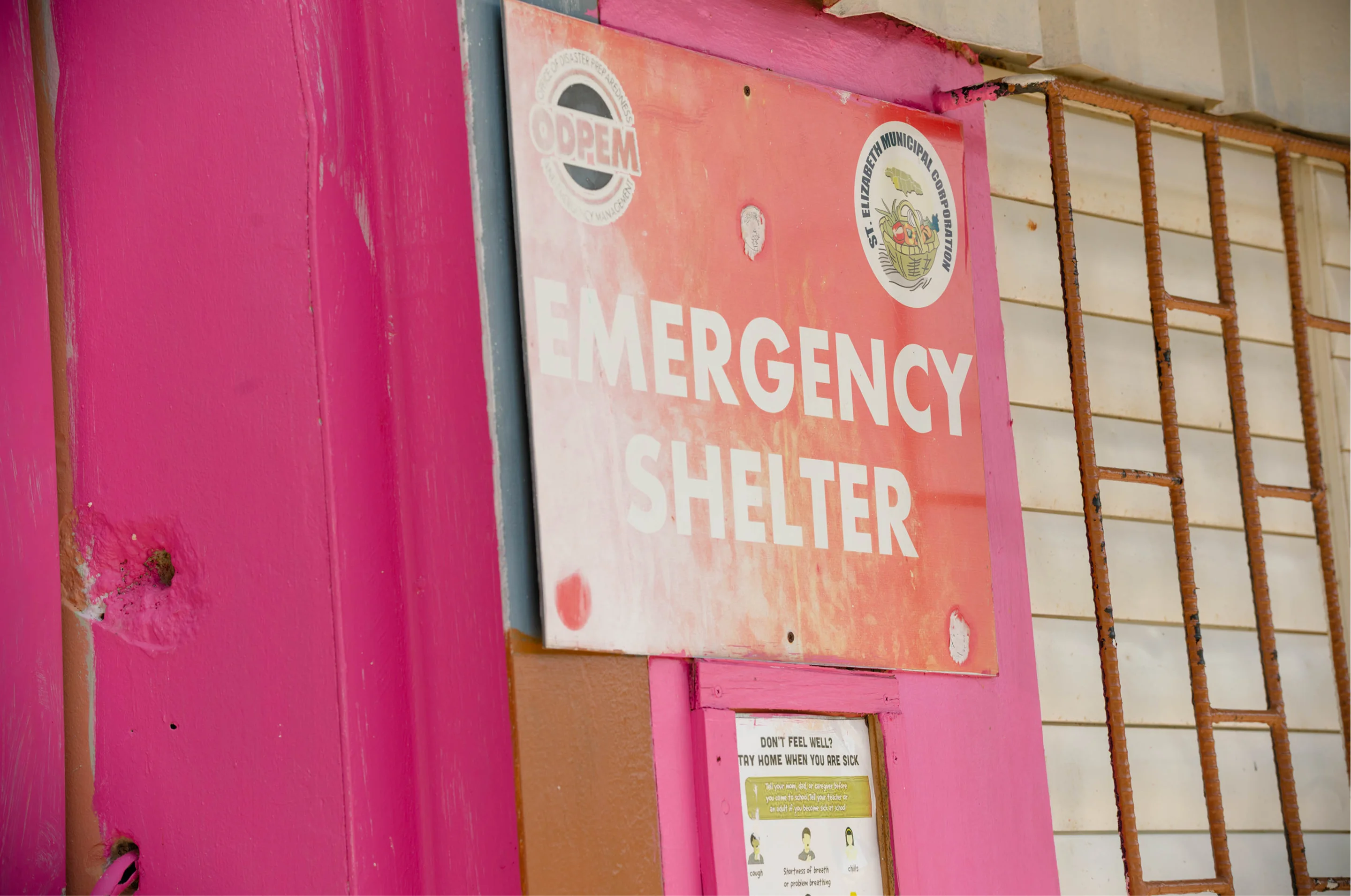
Over the past five years, we have delivered eight major infrastructure projects, upgrading schools and health clinics in Dominica, Barbados, Belize, the Dominican Republic, and Trinidad and Tobago. Each site now serves as a safe, resilient hub equipped to protect families during hurricanes and keep education and healthcare running in their aftermath.
These buildings are living models of climate resilience - proof that investing in people, systems, and communities can protect lives, safeguard education, for faster recovery.
Our facilities have already withstood eight major hurricanes including Fiona, Bret, Tammy, Beryl, and Ernesto - and in times of disaster, continue to:
Shelter families with clean water, reliable power and a place of safety and security
Reopen classrooms quickly so children can keep learning
Keep clinics running so health workers can save lives without interruption
Storm-ready infrastructure built for the fiercest storms
Renewable energy, water systems, telemedicine, and satellite communications
.webp)
.webp)
.svg)
.svg)
GRANTEE HIGHLIGHTS
St. Vincent and the Grenadines
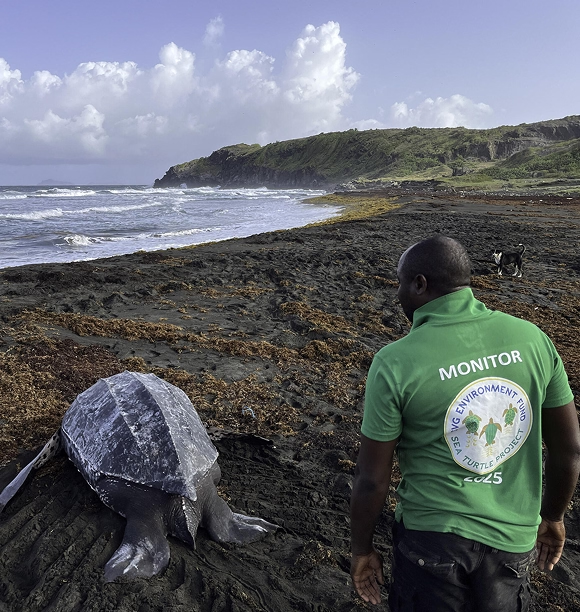
Real climate solutions come from the people closest to the land and sea. SVGEF works across St. Vincent and the Grenadines to protect sea turtles, whales, seabirds, and coastal ecosystems, training local monitors, many of them former poachers and fisherfolk, to lead conservation efforts on the beaches and waters they know best.
That approach reached a milestone in January 2025, when Barrouallie whalers agreed to end orca hunts in exchange for support securing their tuna fishing livelihoods, proof that lasting environmental protection depends on solutions built with the communities who live closest to the impact.
When Hurricane Beryl struck in 2024, that same community network became a lifeline. With CLF's support, SVGEF chartered a catamaran of relief supplies to the hardest-hit Southern Grenadine islands, working directly with local leaders to get aid where it was needed most. For SVGEF, climate resilience and conservation are inseparable, both built ridge to reef, by Caribbean people, for the Caribbean they call home.
St. Elizabeth, Jamaica
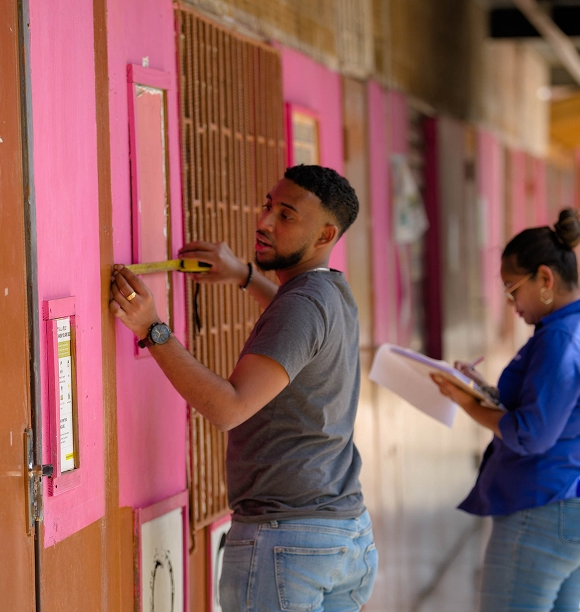
Hopewell Primary School serves a wide rural catchment in St. Elizabeth, Jamaica's agricultural breadbasket, and functions as a critical hurricane shelter for the surrounding community.
CLF is upgrading the site to withstand storms of up to Category 5 intensity, work that includes structural reinforcement, roof replacement, hurricane shutters, a solar energy system with battery backup, expanded water storage, and accessibility improvements. The project also adds an EcoSky Water atmospheric water generation system, giving the school and its neighbors a reliable source of clean drinking water even when grid power fails.
When complete, Hopewell will function as a safe, self-sufficient shelter, keeping families protected and classrooms running no matter what the next storm brings.
Antigua & Barbuda
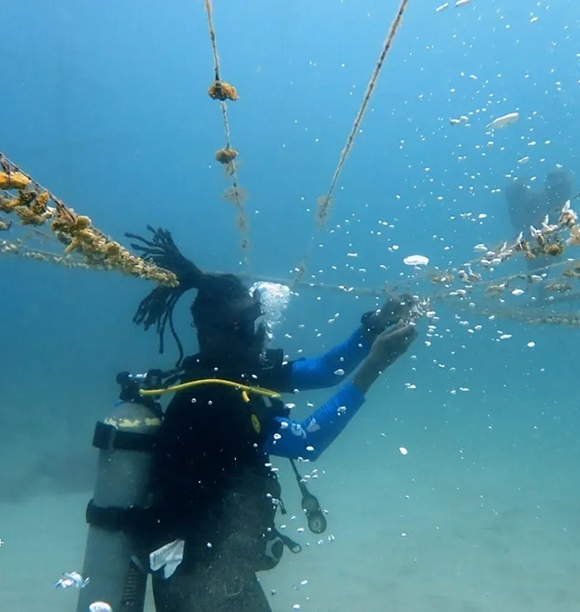
In Antigua and Barbuda, Integrated Health Outreach works alongside women, youth, and communities to build a more equitable, resilient future. IHO helps protect the island's coral reefs and wetlands, trains community members to reduce pollution, and brings conservation education into schools, reaching hundreds of young people.
Through hands-on programs in beekeeping, eco-tourism, and craft-making, IHO is also helping more than 100 community members build new skills and stronger livelihoods. We're proud to spotlight partners like IHO, helping build stronger, healthier, and more equitable communities across the Caribbean.
GRANTEE HIGHLIGHTS
Haiti, Jamaica and wider Caribbean
Innovating in accessible health solutions
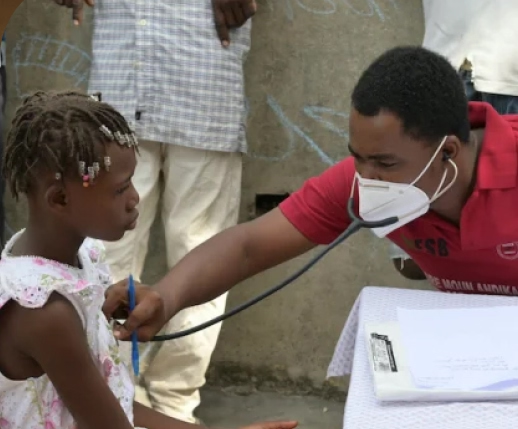
Haiti Air Ambulance is a nonprofit that provides urgent medical transport, triage and last-mile logistics across Haiti—flying critically ill and injured patients to appropriate care regardless of ability to pay while also running training, supply and community-support programs to strengthen local health capacity. HAA has recently broadened its role from a Haiti-focused air-ambulance to a regional emergency responder and logistics partner, scaling disaster relief capabilities and coordinating with international NGOs and governments to support affected islands.
In late 2025 during Hurricane Melissa response, HAA joined wider relief efforts supplying medical evacuations, relief flights and on-the-ground coordination to help communities in Jamaica and neighbouring countries recover from storm impacts.
.webp)
Get Involved